

A blaring alarm at 2 a.m. does you no good if nobody's listening. That's the gap most homeowners don't think about until they're standing in their driveway wondering whether the siren woke a neighbor, scared off an intruder, or did absolutely nothing at all. An alarm that only makes noise is a deterrent at best. An alarm that's watched, verified, and acted on by a live monitoring team is protection.
We get asked constantly what actually happens after a sensor trips, who's on the other end of that connection, and whether monitoring is worth paying for month after month. Those are fair questions, and the honest answer is that it depends on what you're protecting and how fast you need help to arrive. If you haven't already, it's worth pairing this with our breakdown of security cameras for homeowners, since cameras and monitored alarms usually work best as a pair rather than a substitute for one another.
At Hillsdale Home Guide, we've spent more than two decades helping Columbus homeowners figure out where their real vulnerabilities are, and alarm monitoring comes up in nearly every one of those conversations. This guide walks through what 24/7 monitoring actually is, how the signal gets from your panel to a person who can help, and where fire alarms, smart-home security, and even identity protection now overlap with the systems installed in your home.
What Is 24/7 Alarm Monitoring?
Professional alarm monitoring is a service where a staffed monitoring center receives a signal the instant your alarm system detects a triggered sensor, whether that's a door contact, a glass-break sensor, a smoke detector, or a panic button, and takes action on your behalf. That action might mean calling you to verify the event, dispatching police or fire crews, or both, depending on what tripped and how you've configured your response plan. The concept isn't new. Central-station monitoring has existed since the earliest commercial burglar alarm networks in the 1800s, and the underlying idea, that a hazard event should reach a human who can respond, is documented on wikipedia.org's overview of security alarm history and remains the foundation of every modern system we install.
What's changed is the speed and redundancy behind that signal. Modern panels don't rely on a single phone line anymore. They use cellular radios, broadband internet, and battery backups so that a cut wire or a power outage doesn't leave your home silent.
How Does Professional Alarm Monitoring Actually Work?
When a sensor trips, the panel sends a coded signal over a dedicated monitoring line, a secure cellular or IP connection reserved specifically for communicating with the central station, and an operator sees the alert on their screen within seconds. From there, trained staff follow a response protocol: attempt to reach the homeowner at a listed number, ask for a verbal password to rule out a false alarm, and dispatch emergency responders if there's no answer or the situation warrants it.
It's a similar principle to the large-scale public warning networks used for natural disasters. The California tsunami warning system and broader coastal tsunami monitoring networks work on the same core idea: sensors detect a hazard, a monitoring authority verifies it, and an alert reaches the people who need to act, all within a narrow window of time.
"Early warning systems save lives by giving people time to prepare and act before a hazard, whether a storm, a flood, or a tsunami, actually strikes."
Your home system operates on a much smaller scale, but the mechanism is identical: detect fast, verify, and get the right people moving before the situation escalates.
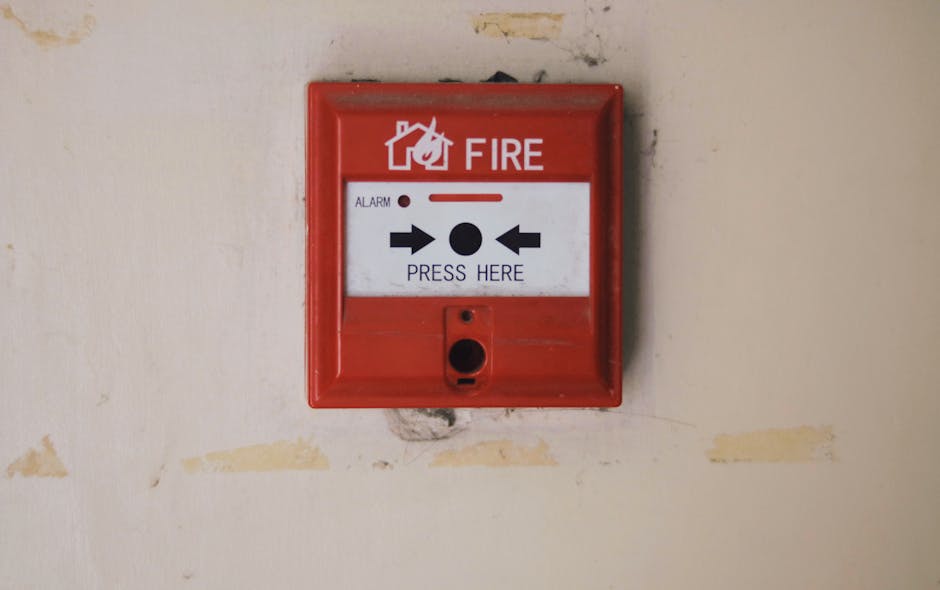
Is Monitored Fire Alarm Protection Different From Burglar Alarm Coverage?
Yes, and the difference matters more than most homeowners realize. A monitored fire alarm is treated as a life-safety priority, meaning dispatch to fire services happens immediately, without the verification delay used for burglary signals, because every second counts when smoke or heat is detected.
Working smoke alarms cut the risk of dying in a reported home fire significantly, and connecting that alarm to a monitored line adds a layer of protection that a stand-alone smoke detector can't offer on its own, according to the Centers for Disease Control and Prevention.
"A home fire alarm that only sounds locally depends on someone being home, awake, and able to respond. A monitored system removes that dependency."
We treat fire monitoring as a non-negotiable add-on for any client with a finished basement, an older furnace, or a kitchen that sees heavy daily use. Expert repair ensures the problem is fixed at its source, but no repair prevents every fire, which is exactly why the monitoring line matters as a backstop.
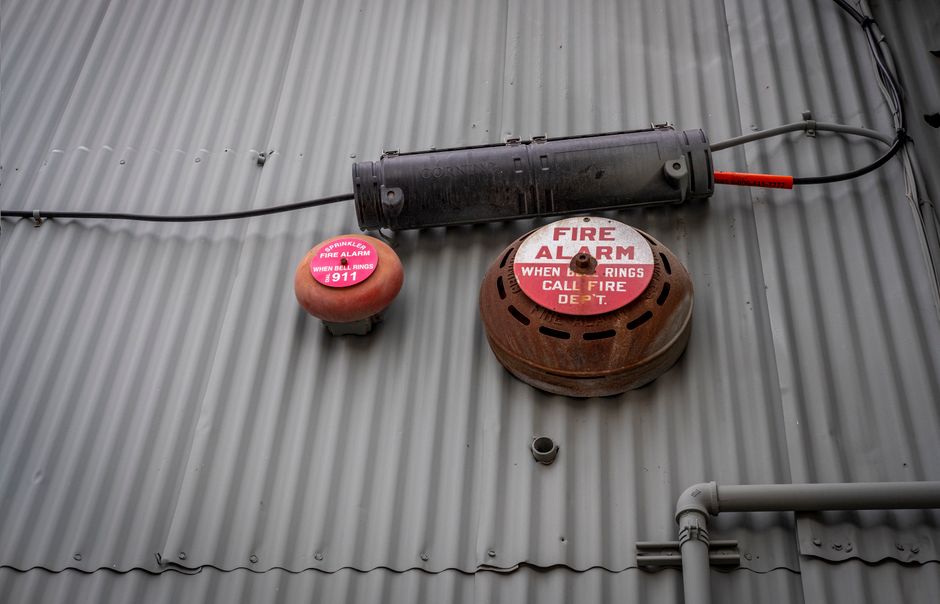
What a Monitored Alarm System Watches For
A full monitoring plan covers more ground than most people expect when they first sign up. A properly configured system typically watches for:
- Door and window entry breaches through contact sensors
- Glass breakage near ground-floor windows
- Interior motion after your away mode is armed
- Smoke, heat, and carbon monoxide levels
- Water leaks near appliances, sump pumps, and basements
- Extreme temperature swings that signal a failed furnace or AC unit
- Panic or duress button activation
- Loss of power or communication at the panel itself
That last item is one people overlook. A system that goes silent because a line was cut or the power failed is exactly the scenario monitoring is designed to catch, since the central station gets notified of the outage itself, not just the alarm events.
Do Monitored Systems Protect Against More Than Break-Ins?
Increasingly, yes. As alarm panels connect to home Wi-Fi networks and smart-home hubs, providers have started bundling services that go beyond physical intrusion, including malware protection for connected devices and identity theft protection tied to the same account that manages your alarm. This reflects a real shift in what "home security" covers.
Connected devices, from doorbell cameras to smart thermostats, create new points of exposure that a traditional lock and key never had to account for, and that exposure is growing as more households add smart gadgets to their networks, per reporting from Forbes Advisor. We recommend clients ask their provider directly whether malware protection and identity theft protection are included or offered as an upgrade, since coverage varies widely between packages.

Is Professional Monitoring Worth It, or Can You Monitor Your Own System?
Self-monitoring, where alerts go straight to your phone and you decide whether to call 911, isn't a bad option for every household. It costs less, and for a homeowner who's rarely away from their phone and comfortable making a judgment call at 3 a.m., it can work fine. We'd point that homeowner toward pairing self-monitoring with strong physical deterrents, like the upgrades covered in our guide to window lock upgrades for enhanced security, rather than treating an app notification as a full safety net on its own.
Where self-monitoring falls short is consistency. Phones die, notifications get missed during a meeting, and a single missed alert during a real emergency is the one that costs someone their home or their safety. Professional monitoring exists for the moments you can't guarantee you'll see your phone. Frequent travelers, homeowners with young kids or aging parents on the property, and anyone with a smoke or CO risk are the clearest candidates for paid monitoring. A single person in a well-lit condo with strong locks and a dog that barks at everything has a genuinely lower-risk profile and might reasonably skip it.
What to Expect When You Sign Up for Monitoring
Installation and activation typically happen in one visit. A technician places sensors, tests the monitoring line's connection to the central station, and walks you through arming, disarming, and your verbal password. Most providers run a test signal within the first 24 hours to confirm dispatch protocols are correct on their end.
After that, the system runs quietly in the background. You'll notice it most during false alarms in the first few weeks, usually caused by a pet triggering motion sensors or a door not latching fully, which is normal while everyone in the house adjusts. By the one-month mark, most households have their false-alarm rate down close to zero. Long-term, the value shows up in the events that never happen, the break-in that gets abandoned when a monitored siren sounds, or the small kitchen fire caught before it spreads.
Practical Tips for Getting More From Your Monitored System
- Update your call list any time a phone number changes, since a monitoring center can't reach an old number
- Test your system monthly using the panel's test mode rather than waiting for a real event
- Keep your verbal password memorized by everyone in the household, including teenagers
- Pair door and window sensors with motion coverage rather than relying on entry points alone
- Ask your provider whether malware protection and identity theft protection are bundled or optional
- Review your monitoring plan yearly as your home changes, especially after a renovation or a new addition
We also encourage clients to walk their perimeter with us before finalizing sensor placement. Reliable solutions tailored to your needs start with an honest look at where your home is actually vulnerable, not a generic sensor package. Derek Romero has walked hundreds of Columbus properties over the past twenty years, and the pattern holds: the houses with the fewest incidents are the ones where the alarm plan was built around the specific layout, not bolted on as an afterthought. If you haven't reviewed your entry points recently, our piece on door locks and entry point security basics is a good place to start before you add monitoring on top.
Quick action saves money and, more importantly, it saves the minutes that actually matter when something goes wrong. Whether that's a fire catching before you're awake, a window forced open while you're at work, or a smart device on your network being probed by something it shouldn't be talking to, a monitored system means someone's paying attention even when you can't be. We're happy to walk through your home, look at what you already have in place, from your locks to your motion sensor lighting, and put together a monitoring plan that actually fits how you live, not a one-size package pulled off a shelf.