
Picking trees and shrubs for a Columbus yard isn’t guesswork. Ohio sits in USDA hardiness zones 5b and 6a, which means your plants face hard winters, humid summers, and clay-heavy soil in many neighborhoods. Get the selection wrong and you’re replanting in three years. Get it right, and a single thoughtful planting decision adds decades of shade, privacy, and curb appeal with almost no ongoing effort.
Fast-growing trees can transform a bare lot into a shaded retreat far sooner than slower species allow. But speed alone doesn’t make a tree a good neighbor. Root systems, canopy spread, storm resilience, and proximity to structures all factor in before a single hole gets dug. The same logic applies to shrubs. A plant that looks tidy at the nursery can overtake a front walkway or push roots into a foundation within a few seasons if it’s the wrong fit for the space.
At Hillsdale Home Guide, we’ve worked alongside Columbus homeowners on landscaping projects of every scale for more than two decades. This guide covers the trees and shrubs that consistently perform well in central Ohio, the ones worth avoiding, and the timing that gives new plantings the strongest possible start.
What Makes a Tree or Shrub Right for a Columbus Yard?
Columbus sits at a climate crossroads. Winters regularly dip below 0°F in hard years, summers push into the 90s with high humidity, and spring brings heavy rainfall that tests drainage across many neighborhoods. The trees and shrubs that hold up here share a few traits: tolerance for clay or compacted soil, resistance to Ohio’s freeze-thaw cycles, and low disease pressure without constant spraying or pruning.
Soil preparation matters as much as species selection. Columbus clay drains poorly and compacts easily. Amending planting holes with compost, choosing species adapted to wet feet or dry spells, and mulching properly saves a lot of frustration by year two. Research highlighted by the National Institutes of Health shows that urban green spaces, including trees and planted shrub borders, contribute measurably to air quality, neighborhood cooling, and stress reduction, which gives homeowners a practical reason beyond aesthetics to choose plantings thoughtfully.
“Exposure to trees and planted green spaces is associated with lower ambient temperatures, improved air quality, and measurable reductions in physiological stress markers in urban and suburban residents.”
What Are the Best Fast-Growing Trees for Columbus Yards?
Fast-growing trees in Ohio can gain 3 to 8 feet per year under the right conditions. The best choices combine that speed with structural strength. A weak-wooded fast grower becomes a hazard in an ice storm. These are the species our team recommends most often for central Ohio lots.
- Autumn Blaze Maple — One of the most reliable fast growers for Ohio. Gains 3 to 5 feet annually, develops a strong central leader, and delivers a dramatic red show every fall.
- Tulip Poplar — Ohio’s state tree grows quickly and straight, tolerates clay soils, and provides generous canopy coverage. It gets large, so give it room to spread its branches many feet into the yard before you choose a planting spot.
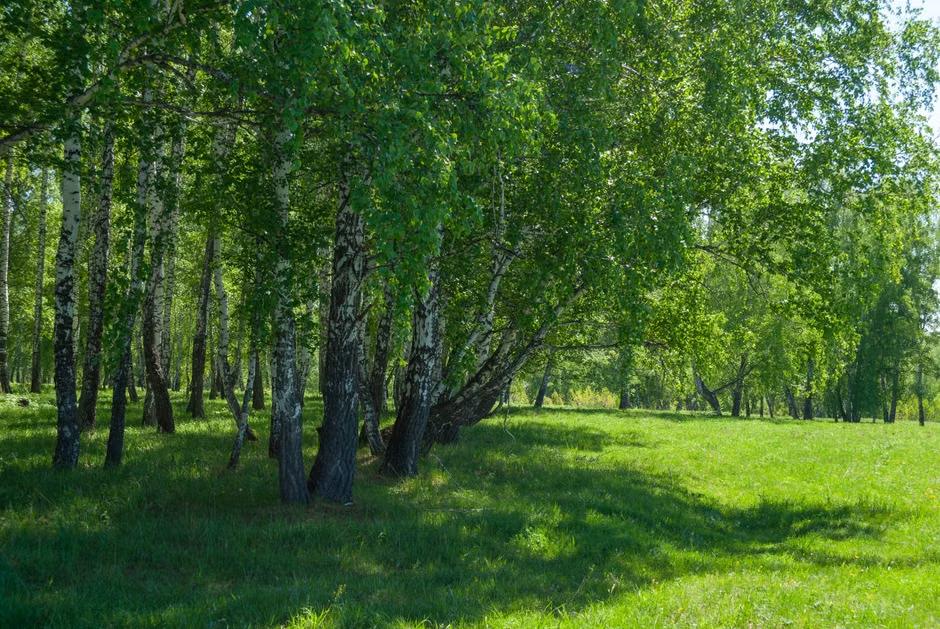
- River Birch — Fast-growing, tolerant of wet spots, and resistant to the bronze birch borer that plagues white birch varieties in Ohio. The peeling cinnamon bark adds real winter interest.
- Bald Cypress — Adaptable to both wet and dry conditions, grows steadily, resists pests, and adds a fine-textured look unusual in Ohio yards. Looks like an evergreen but drops its needles in winter.
- Hybrid Willow — Can gain 6 to 8 feet per year in moist areas. Best used as a screen or windbreak rather than a standalone specimen near foundations or buried water lines.
- Sycamore — Among the fastest native trees available. Better suited for large yards or open areas; the canopy and root system extend many feet in every direction at maturity.
Evergreen types of trees earn a spot on this list too. Norway Spruce grows 1 to 3 feet yearly and forms excellent windbreaks along property lines. Eastern White Pine is faster at 2 to 4 feet per year and works well for privacy screening, though it eventually gets quite tall. For a smaller evergreen that holds a tidy shape without shearing, Emerald Green Arborvitae is hard to beat as a foundation or hedge planting.
What Are the Best Low-Maintenance Bushes for Ohio?
Low-maintenance shrubs for Ohio handle variable rainfall, tolerate clay soil without special amendment, and don’t need constant shearing to stay in bounds. The best ones also carry seasonal interest across multiple seasons: spring flowers, summer foliage, fall berries, and attractive winter structure.
- Inkberry Holly — Native, deer-resistant, and content in both wet and average soil. Stays tidy with minimal pruning. Produces black berries that birds actively seek in winter.
- Smooth Hydrangea (Annabelle) — Blooms reliably even after a rough winter because it sets flower buds on new wood. Cut it back hard in early spring for massive white blooms each summer.
- Spirea (Goldmound or Anthony Waterer) — Fast-growing, compact, and nearly indestructible in Ohio conditions. Blooms in early summer with very little care.
- Arrowwood Viburnum — Dependable native offering spring flowers, strong fall color, and blue-black berries. Tolerates part shade, handles clay, and rarely needs pruning to stay presentable.
- Forsythia — Blooms bright yellow in early spring before most other shrubs wake up. Tough, fast, and forgiving of neglect, though it benefits from occasional renewal pruning once established.
- Virginia Sweetspire (Itea) — An underused native that handles both sun and part shade, offers fragrant white summer flowers, and turns brilliant red in fall. Stays under 4 feet without pruning in most conditions.
Best Native Shrubs for Birds
Native shrubs offer the strongest ecological return in Ohio yards. They’ve co-evolved with local insects, which in turn feed nesting songbirds and support pollinators through the full growing season. A yard planted with even a handful of native shrubs supports dramatically more wildlife than one planted entirely with ornamentals.
“Native plants support far greater insect biodiversity than non-native ornamentals, a difference that ripples up through the food chain to affect bird populations, pollinators, and broader ecosystem health in residential areas.”
For Columbus yards specifically, Serviceberry tops the list. It produces early spring blooms that feed pollinators, followed by berries that attract dozens of bird species through June. It grows as a multi-stem shrub or small tree and fits easily into tighter spaces near structures. Spicebush is another strong pick. It serves as a host plant for the Spicebush Swallowtail butterfly and produces bright red berries that migrating birds actively seek in fall.
Elderberry grows fast and produces heavy crops of dark berries by midsummer, and it’s also edible if you want to harvest some for yourself. Native viburnums, hazelnut shrubs, and buttonbush round out a planting palette that keeps birds returning season after season. Our team, serving Columbus homeowners across central Ohio for over two decades, consistently finds that native plantings establish faster and require far less intervention than many imported ornamentals once past the first season.
Should You Plant Bradford Pear Trees?
Bradford pear trees were planted heavily across Ohio suburbs from the 1980s onward. They grow fast, bloom in dramatic white clouds each spring, and were considered low-hassle for years. The reality has turned out differently. These trees have two serious problems, and both tend to show up at the worst possible time.
First, their branch structure is inherently weak. The tight, upright branching angle creates attachment points prone to catastrophic failure under ice load or high wind. A ten-year-old Bradford pear that looked beautiful in April can lose major limbs by June with little warning. Branches can split and fall with a force that damages fences, vehicles, and structures below. Second, Bradford pears spread aggressively. Cross-pollination between nearby trees produces fertile seed that birds disperse into open fields and natural areas. The thorny seedlings grow fast and crowd out native vegetation. Ohio strongly discourages new Bradford pear plantings, and several neighboring states have moved toward outright bans for this reason.
If you already have one and it’s structurally sound, you don’t necessarily need to remove it immediately. But when it fails, and most eventually do, replace it with a native alternative. Redbud, Serviceberry, or Flowering Dogwood all deliver similar spring flower interest without the structural risk or ecological problems.
What Can I Plant in October in Ohio?
October is one of the best planting months for Columbus yards. Soil temperatures stay warm enough for root establishment well into fall, air temperatures have dropped so transplants aren’t stressed by heat, and fall rains reduce the watering demand considerably. Roots grow actively through the fall even after top growth has stopped, giving a tree or shrub planted in October a meaningful head start over one planted the following spring.
Nearly every tree and shrub on this list can go in the ground through mid-October without issue. Bare-root stock is the exception; that’s better handled in early spring. Container and balled-and-burlapped stock both plant well in fall. One caution: avoid planting broadleaf evergreens like rhododendron or boxwood too late in fall in exposed, windy sites. They need a few weeks of root growth before the ground freezes hard.
Low-Maintenance Shrubs for the Front Yard
Front yard shrubs need to stay tidy without constant attention and hold their shape across seasons. Mature height matters here more than most homeowners initially realize. A shrub that tops out at 3 feet works well under a window as a foundation planting. One that reaches 8 feet eventually blocks views, shades the foundation, and crowds the front walk regardless of how often it gets sheared.
For foundation planting under windows (2 to 3 feet at maturity): compact holly varieties like Soft Touch or Shamrock, dwarf Spirea, and Little Henry Itea are reliable choices. For low hedges or flanking an entrance (3 to 5 feet): Drift roses, native Bottlebrush Buckeye, and smooth Hydrangea all deliver seasonal color with minimal upkeep. For corner anchors or taller privacy screening (5 to 8 feet): native Arrowwood Viburnum, Winterberry Holly, and Emerald Green Arborvitae stay presentable without constant intervention and handle Ohio winters without complaint. If you’d like a professional assessment of what works best for your specific yard conditions, our home services team offers consultations across the Columbus area.
Six Practical Tips for Getting New Plantings Established
- Dig wide, not deep. The planting hole should be two to three times the width of the root ball but only as deep as the root ball is tall. Planting too deep is a leading cause of long-term decline in otherwise healthy trees.
- Skip the amendments in the backfill. Backfill with native soil. Amended backfill creates a “pot” effect that discourages roots from expanding into the surrounding clay, limiting establishment.
- Water deeply on a consistent schedule for the first two seasons. Slow, deep watering encourages roots to follow moisture downward rather than staying shallow. A soaker hose works better than a sprinkler for this.
- Mulch out to the drip line. A 2 to 3 inch mulch ring holds moisture, moderates soil temperature, and reduces weed competition dramatically. Keep mulch several inches away from the trunk itself.
- Stake only if necessary, and remove stakes by year two. Trees that flex slightly in wind develop stronger trunk wood. Permanent staking creates structural weakness over time, not strength.
- Plan for mature size, not nursery size. Research the mature height and spread of any tree before committing to a planting location near structures, overhead lines, or property lines. The space looks generous now and won’t later.
Choosing the right trees and shrubs for a Columbus yard is one of the highest-return investments a homeowner can make. Good selection builds shade, privacy, and habitat over years while reducing the maintenance overhead that comes from planting species poorly suited to Ohio’s climate and soil. Derek Romero, who leads the team at Hillsdale Home Guide, consistently tells homeowners to prioritize native and well-adapted species over fast-growing novelties that promise results in year one but create structural or ecological problems by year five. Start with the right plant in the right place, put it in the ground at the right time, and give it the establishment care it needs in those first two seasons. The trees and shrubs that earn their spot in a Columbus yard will keep delivering for decades with very little asked of you in return.