
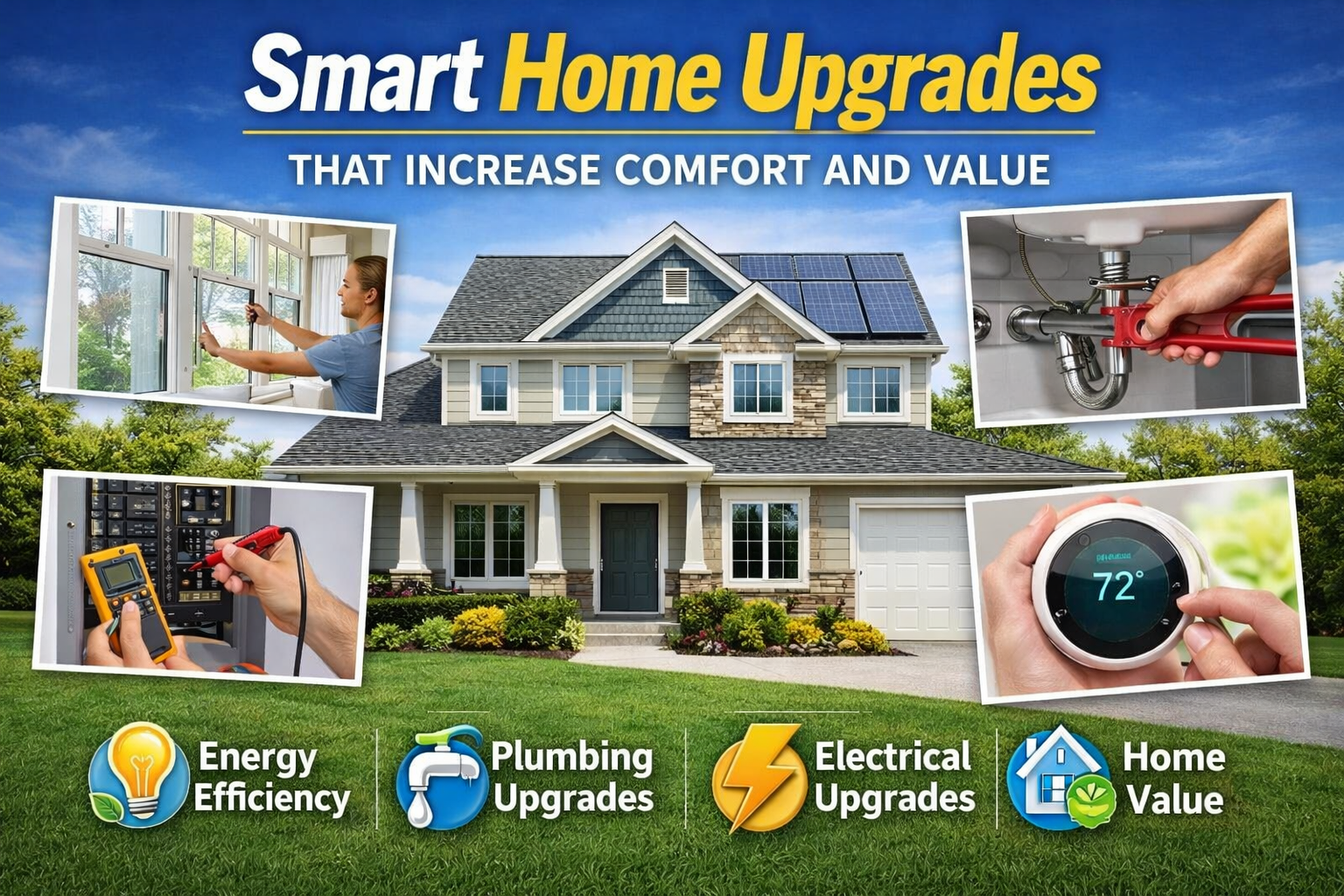
Smart home upgrades help homeowners improve daily comfort while protecting long-term property value. Instead of focusing only on appearance, the best upgrades improve how a home functions, how much energy it uses, and how comfortable it feels year-round.
Why Smart Home Upgrades Matter
Many home problems start with outdated systems or inefficient design. Smart home upgrades focus on fixing the root cause of discomfort, high energy bills, and system failures. By upgrading key areas, homeowners can prevent costly repairs and improve their home’s performance every day.
Energy Efficiency Upgrades
Energy-efficient smart home upgrades reduce heating and cooling costs while stabilizing indoor temperatures. Adding insulation, sealing air leaks, and upgrading windows all help prevent energy loss. These changes allow HVAC systems to run more efficiently and last longer.
Plumbing System Improvements
Plumbing-based smart home upgrades include replacing old pipes, installing low-flow fixtures, and fixing hidden leaks. These upgrades protect walls, floors, and foundations from water damage while lowering monthly water bills.
Electrical System Enhancements
Modern homes rely on safe and reliable electrical systems. Smart home upgrades, such as panel upgrades, new wiring, and added outlets, support today’s appliances and technology while reducing safety risks, such as overheating or breaker trips.
Comfort and Climate Control
Comfort-focused smart home upgrades include better airflow, improved ventilation, and modern thermostats. These improvements help rooms maintain even temperatures and enhance indoor air quality year-round.
Long-Term Home Value
Homes with updated systems are more attractive to buyers. Smart home upgrades signal that a property has been well cared for, which can lead to higher resale value and fewer inspection issues during a sale.
Smart home upgrades are one of the best ways to improve how a home feels today while protecting its value for the future. With the right improvements, homeowners can enjoy greater comfort, lower costs, and stronger long-term performance.